June 9, 2026
The Americans with Disabilities Act (ADA) requires public spaces to be accessible to people with disabilities. A key part of that accessibility is the way entrances function for visitors, employees, patients, students, and customers. ADA door operator systems help make entry points easier to use by reducing physical barriers and supporting safer, more convenient movement through a building. When these systems are planned, installed, and maintained properly, public facilities can create more welcoming spaces while supporting ADA compliance.
The Importance of ADA Compliance for Door Systems
ADA Regulations for Public Access
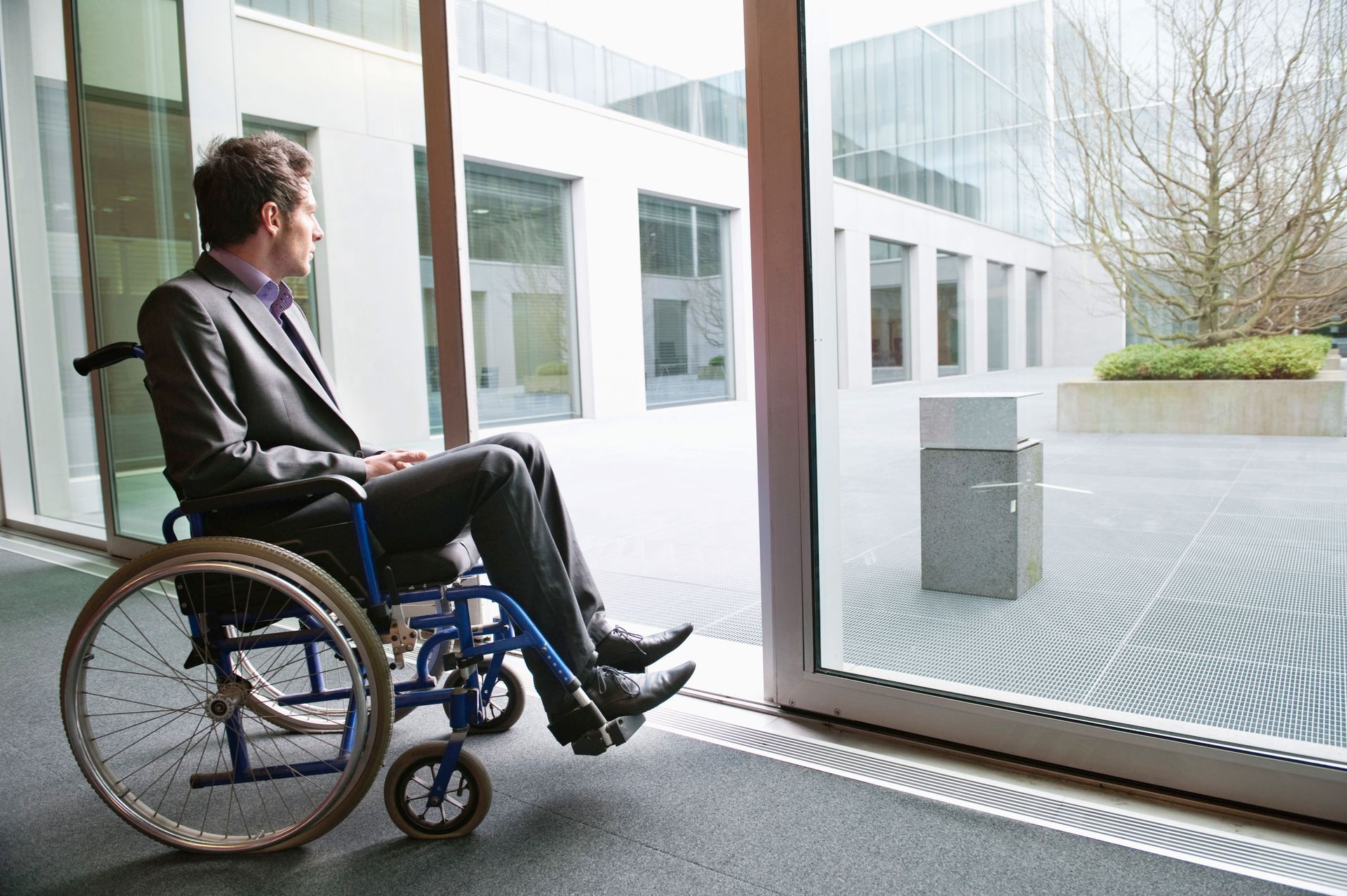
ADA regulations provide guidance for equal access in public spaces. These rules address entrances, clear openings, maneuvering space, hardware, operating force, and access routes. For newly constructed public facilities, at least 60% of entrances must be accessible to wheelchair users. ADA door operator systems can support these requirements by helping people enter and exit with less physical effort, especially in high-traffic buildings or spaces used by people with mobility limitations.
Implications of Non-Compliance
Non-compliance with ADA standards can create legal, financial, and reputational problems for organizations. Facilities that fail to provide accessible entrances may face complaints, fines, litigation, or costly retrofits. Beyond legal concerns, inaccessible entrances can send the message that some users were not considered during planning. These systems help address these concerns by improving access at one of the most common points of interaction between a person and a public facility.
Benefits of Accessible Design
Accessible design benefits more than wheelchair users. Automatic or low-energy door systems can help older adults, people using walkers or canes, parents with strollers, delivery workers, and visitors carrying packages. Businesses may also reach a wider customer base when their entrances are easy to use. ADA door operator systems support a smoother experience for everyone who enters the building, making accessibility part of the daily function of the space rather than a separate accommodation.
Creating Inclusive Environments
Accessible entrances help set the tone for an inclusive environment. When people can enter a building without unnecessary strain, delay, or assistance, they can participate more independently in public life. This applies to schools, offices, healthcare buildings, retail spaces, restaurants, municipal buildings, libraries, and entertainment venues. These systems are one practical investment that can help facilities reduce barriers and make access more consistent across different types of users.
Key Features of ADA-Compliant Door Operating Systems
Automatic Door Openers
Automatic door openers are among the most recognizable accessibility features in public facilities. They allow doors to open through sensors, push plates, touchless switches, or other activation devices. According to ADA guidelines, door openers must include sensors and be activated with minimal effort. ADA door operator systems should operate reliably, open at a safe speed, allow adequate time for passage, and provide enough clearance for people using mobility devices.
Manual Door Use and Accessibility
Manual doors still need to meet accessibility standards. Door pressure, handle design, threshold height, swing direction, and maneuvering clearance all affect whether a door is usable. ADA guidance generally limits the opening force for interior hinged doors to no more than five pounds. If a manual door is heavy, difficult to grip, or hard to approach, ADA door operator systems may be a practical upgrade that improves usability without requiring a complete entrance redesign.
Placement and Clear Space Requirements
Placement and clear floor space are critical in accessible entrance design. Users need enough room to approach the door, activate controls, wait for the door to open, and move through the opening safely. Clear space is especially important for wheelchair users who may approach from different angles. Controls should not be blocked by furniture, displays, trash cans, planters, or temporary signage. Proper placement helps the entire system work as intended.
Accessible Hardware and Controls
Door hardware and controls must be easy to operate. Lever handles, push plates, wave sensors, and other controls should be mounted within accessible reach ranges and usable without tight grasping, pinching, or twisting of the wrist. These systems should also include controls that are visible, intuitive, and positioned where users can activate them without backing up, stretching, or moving into the path of a swinging door.
Proper Signage and Instructions
Signage helps users identify accessible entrances and understand how to use door controls. Clear signs can reduce confusion, especially in buildings with multiple entry points or renovated layouts. Tactile signage, Braille, and high-contrast visual elements may be needed depending on the location and purpose of the sign. Simple instructions near activation devices can help people use the entrance with confidence.
Assessing and Evaluating Existing Door Systems
Conducting Accessibility Audits
An accessibility audit is a useful first step for facilities that want to identify compliance gaps. During an audit, doors are reviewed for clear width, opening force, hardware, thresholds, approach space, activation controls, signage, and overall function. For buildings that already have ADA door operator systems, audits should also review sensors, switches, timing, closing speed, power supply, and safety features to confirm the system is working as expected.
Identifying Common Compliance Issues
Common door-related accessibility issues include heavy doors, narrow clear openings, high thresholds, poorly placed push plates, blocked access routes, missing signage, and controls mounted outside accessible reach ranges. Some facilities also install automatic operators without accounting for approach space or door swing clearance. Identifying these problems early allows organizations to prioritize the most important repairs and upgrades.
Utilizing Technology for Assessment
Modern assessment tools can help facility managers collect more accurate information. Measuring devices can document opening force, door width, slope, reach range, and clearance. Digital inspection forms can also help maintenance staff track recurring issues and create a record of repairs. When used consistently, these tools support better planning and help organizations make informed decisions about accessibility upgrades.
Working With Accessibility Professionals
Accessibility professionals can provide valuable guidance when evaluating doors and entrances. They can identify details that may be missed during an internal review, explain how ADA standards apply to the facility, and recommend practical solutions. Their input is especially helpful in older buildings, historic properties, healthcare spaces, or campuses with multiple entrances. Professional review can also help organizations avoid upgrades that solve one problem while creating another.
Strategies for Implementing New Compliance Measures
Budgeting for Accessibility Upgrades
Accessibility upgrades should be planned with clear priorities and realistic budgets. Some issues may require immediate correction, while others can be addressed through phased improvements. Budgeting may include product costs, electrical work, carpentry, permits, inspections, signage, staff training, and future maintenance. ADA door operator systems should be selected with both upfront cost and long-term performance in mind, since cheaper systems may become more expensive if they require frequent repairs.
Choosing the Right Products and Vendors
The right products depend on building use, traffic volume, door type, power availability, weather exposure, security needs, and user behavior. A busy healthcare entrance may require a different system than a small office or municipal building. Vendors should understand accessibility standards, door hardware, safety requirements, and installation best practices. These systems should be compatible with the existing door, frame, lockset, access control equipment, and fire safety requirements.
ADA compliance in door operating systems is essential for public spaces that serve people with different mobility needs. By reviewing regulations, assessing existing entrances, selecting the right products, and maintaining systems over time, organizations can create safer and more accessible buildings. ADA door operator systems play a valuable role in this process by making entrances easier to use, more reliable, and more welcoming for everyone who depends on them. Contact M Spinello & Son Locksmiths Safe & Security Experts today to learn more about ADA door operator systems.