By Jimi White
September 9, 2026
Learn how professional camera placement, lighting, recording settings, network security, and maintenance maximize your video surveillance investment from Rockford's best residential and commercial security camera installation team.
By Jimi White, Master Locksmith & Security System Designer / Owner of M. Spinello & Son
Professional security camera installation goes beyond mounting hardware and running cables. M. Spinello & Son provides property owners across Rockford, Northern Illinois, and Southern Wisconsin with hands-on education on camera positioning, lighting management, NVR configuration, remote viewing cybersecurity, and system expansion—ensuring long-term value and zero monthly fees.
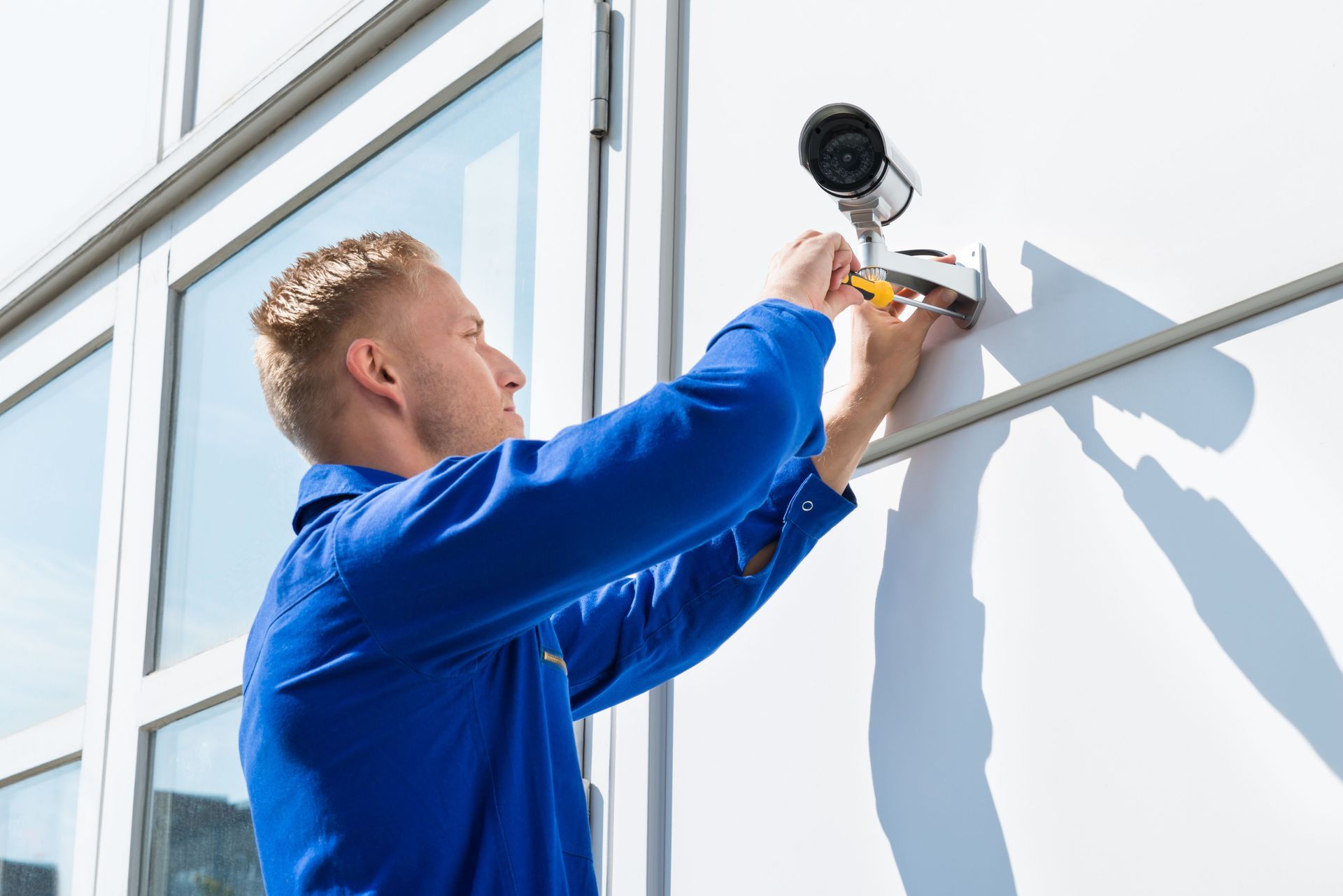
Installing a security camera system involves much more than mounting cameras and connecting them to a recorder. The difference between a basic installation and a well-designed surveillance system often comes down to the knowledge shared by the professionals who install it. Experienced video surveillance camera installers do more than complete the technical work. They help property owners understand how camera placement, lighting, recording settings, network security, maintenance, and everyday use affect the overall performance of the system. By learning from the installation process, property owners can make better decisions about using their equipment effectively over time.
Teaching You How to Position Cameras Effectively
One of the first lessons a skilled installer provides is how camera placement affects what the system actually captures. A camera placed too high may show a broad area but miss important facial details, while one positioned too low may be easier to tamper with. Entry doors, driveways, walkways, parking areas, loading zones, and other common access points often require different viewing angles. Professional video surveillance camera installers evaluate these areas based on how people move through the property, where important activity is most likely to occur, and which obstacles could block the field of view.
Installers also explain why more cameras do not automatically create better coverage. Overlapping views, blind spots, glare, and obstructions can reduce the usefulness of footage if the system is not planned carefully. Trees, signs, fences, and architectural features affect visibility. By showing property owners why each camera is placed in a specific location, installers help them understand how to monitor vulnerable areas without wasting equipment or creating unnecessary gaps in coverage.
Teaching You How to Manage Lighting Conditions
Lighting has a major effect on image quality, yet it is often overlooked when cameras are first installed. Bright sunlight, deep shadows, headlights, reflective surfaces, and low-light areas can all make footage difficult to interpret. Skilled video surveillance camera installers explain how features such as infrared illumination, wide dynamic range (WDR), low-light sensitivity, and proper camera orientation improve visibility in challenging conditions. They may also identify areas where adding or repositioning exterior lighting makes recorded footage clearer and more useful.
Understanding lighting helps property owners recognize why footage looks different at various times of day. A camera that performs well at noon may struggle after sunset if nearby lights create glare or if the area becomes completely dark. Installers demonstrate how to review nighttime footage, adjust settings, and identify whether a lighting issue is caused by the environment or the camera itself. This knowledge makes it easier to maintain consistent surveillance in changing conditions.
Teaching You How to Configure Recording Settings
Camera systems offer several recording options, including continuous recording, motion-triggered recording, scheduled recording, and event-based alerts. Each setting affects storage capacity, playback efficiency, and the amount of footage available when an incident occurs. Professional video surveillance camera installers explain how frame rate, resolution, compression, retention periods, and motion sensitivity work together. This helps property owners choose settings that balance image quality with available storage rather than relying on default configurations that may not match their needs.
Installers also teach users how to avoid common problems with motion detection. If sensitivity is too high, moving branches, passing vehicles, pets, or shadows generate constant alerts. If sensitivity is too low, important activity could be missed. Learning how to define motion zones and adjust alert thresholds makes the system easier to use on a daily basis. Property owners who understand these settings are better prepared to fine-tune performance as conditions around the property change.
Teaching You How to Use Remote Access Securely
Many modern surveillance systems allow users to view live or recorded footage from smartphones, tablets, or computers. Remote access adds convenience, but it also introduces cybersecurity considerations that should not be ignored. Experienced installers show users how to create strong passwords, manage permissions, and avoid sharing credentials unnecessarily. They also explain how firmware updates and secure network settings protect the system from unauthorized access.
Remote access should be convenient without becoming a weak point in the security setup. Property owners may need different access levels for family members, employees, managers, or service providers. An installer demonstrates how to create individual user accounts when the system supports them and how to revoke access when it is no longer needed. These practices help users control who can view footage and change system settings.
Teaching You How to Review Footage Efficiently
A surveillance system is only useful if users know how to find the footage they need. Professional video surveillance camera installers demonstrate how to search recordings by date, time, camera, or event marker. They show users how to export a clip, save a snapshot, or create a USB backup when footage needs to be shared with law enforcement, insurance representatives, property managers, or other authorized parties. Knowing these steps in advance saves valuable time during an incident.
Efficient review depends on understanding what the system records and how long footage is retained. Users should know whether older recordings are automatically overwritten and how quickly storage space is consumed. According to industry surveys, nearly half of U.S. homeowners (48%) state that gaining peace of mind is the main reason they choose to install security systems, including video surveillance cameras. That peace of mind is easier to maintain when property owners know how to access the information their system is designed to provide.
Teaching You How to Maintain System Performance
Security cameras require occasional attention after installation. Lenses collect dust, spiderwebs, water spots, or debris, while vegetation can grow into the field of view. Connections may loosen, storage drives can wear out, and software may need updates. Reliable installers explain a maintenance routine that includes checking image quality, cleaning camera housings, confirming recording status, and testing remote access. These simple steps help identify problems before they become serious.
Seasonal changes also affect system performance. Snow, heavy rain, direct summer sun, or shifting landscaping alter visibility or expose equipment to different weather conditions. Property owners who understand what to inspect notice when a camera has moved slightly, when glare has developed, or when a previously clear view has become obstructed. Regular checks ensure that the system continues to provide useful coverage.
Teaching You How to Plan for Future Needs
A surveillance system should be designed with future changes in mind. A homeowner may add a garage, gate, shed, or outdoor living space, while a business may expand its parking area, inventory space, or customer entrance. Experienced video surveillance camera installers explain whether the current recorder, network, and power setup can support additional cameras later. They discuss compatibility, available channels, storage capacity, and cabling choices that make future expansion simpler.
Planning ahead prevents property owners from having to replace major components when their needs change. It helps them decide which features are worth investing in immediately and which can be added later. By understanding the limitations and capabilities of the system, users make more informed decisions about upgrades. This turns the installation into more than a one-time project and creates a surveillance setup that adapts as the property and its security needs evolve.
Partner with Rockford's Trusted #1 Security Experts
A great surveillance installation is not just about getting cameras online—it is also about helping users understand how to position, configure, secure, review, maintain, and expand the system over time. The guidance provided by knowledgeable video surveillance camera installers makes the equipment easier to use and helps property owners get maximum value from their investment. When users understand the reasoning behind the setup, they are better prepared to respond to changing conditions and make confident decisions about their security.
M. Spinello & Son Locksmiths Safe & Security Experts has provided single-source security solutions across Northern Illinois and Southern Wisconsin since 1905. Our licensed, background-checked P.E.R.C. technicians handle every aspect of hardwired video surveillance installation, door hardware fortification, access control, and home safes with zero monthly fees or annual contracts.
Contact M. Spinello & Son today at (815) 963-0495 to learn more about designing and using a custom surveillance
system tailored to your property.
Proudly serving Rockford, Loves Park, Machesney Park, Belvidere, Roscoe, Rockton, Freeport, DeKalb, Winnebago County, Boone County, Ogle County, Stephenson County, Northern Illinois, Southern Wisconsin and surrounding areas since 1905.
About the Author: Jimi White is a Master Locksmith, Security System Designer, and 4th-Generation Owner of M. Spinello & Son. With over four decades of hands-on expertise spanning complete perimeter security—from commercial doors and ADA operators to master key systems, card access, and 4K surveillance—Jimi leads Northern Illinois’ most trusted local security team.